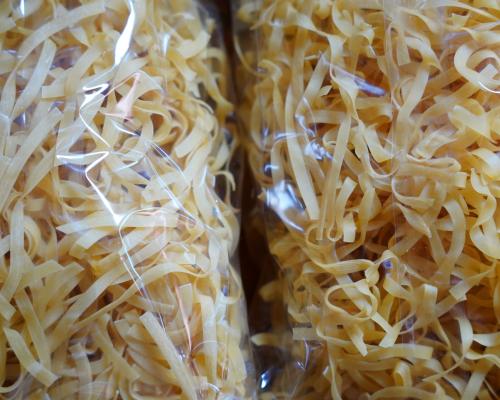
pasta (Flomaria, Aftoudia and Trachanas)
The traditional pasta varieties Flomaria, Aftoudia and Trachanas are an integral part of the Ikarian diet. These pastas, especially Flomaria and Trachanas, are also known on other islands, such as Lemnos, where their production has received greater commercial exposure, but their presence on Ikaria is closely linked to self-sufficiency and the traditional way of life of its inhabitants.
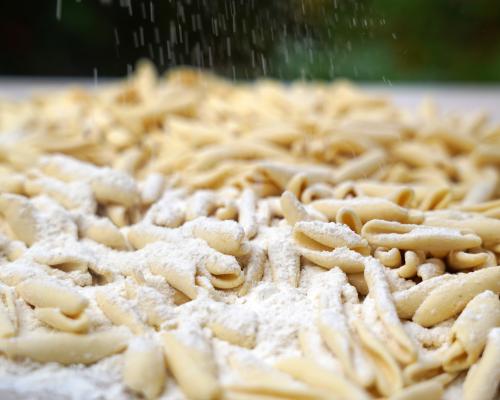
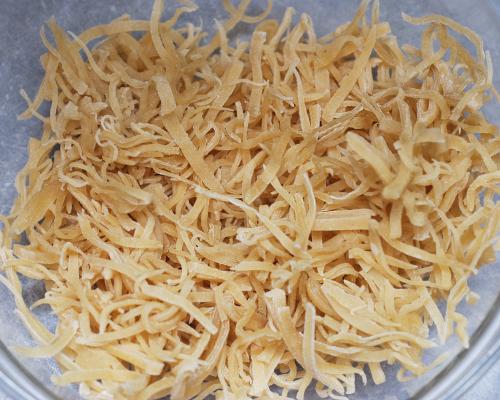
Flomaria (or Flomaria), Aftoudia and Trachanas are traditional Greek pastas produced in many places, including Ikaria, where their preparation is part of the households’ practice of self-sufficiency. Flomaria are usually broad, thin strips of dough reminiscent of hilopites, while Aftoudia are a local variation, often with a more irregular or smaller shape. Trachanas is a granular pasta which, in Ikaria, is made either sweet (with milk) or sour (with yogurt or buttermilk). The uniqueness of Ikarian pasta lies in the traditional recipe, which often uses flour from local grains, fresh milk and eggs from the island’s family farms, thereby integrating them fully into the rural economy and the dietary wealth of the Blue Zone.
Ikaria is known for its mountainous, forested terrain and the rural dispersion of its settlements, factors which have contributed to the preservation of traditional practices and self-sufficiency. Production of these pastas is scattered across the island, mainly in rural areas and villages such as Raches, where women’s cooperatives or small family producers operate, continuing the traditional recipes. Ikaria’s pedoclimatic environment, with differences in altitude and a Mediterranean climate, supports limited cereal cultivation as well as livestock farming, thus providing the basic pure raw materials—flour, milk and eggs—from local sources, enhancing the quality and traditional flavor of the pasta.
The production of Flomaria, Aftoudia and Trachanas in Ikaria follows the classic, handmade method of homemade pasta.
- Raw Ingredients: The basic dough is made from wheat flour (often durum wheat), plenty of fresh eggs, and milk (cow’s, sheep’s, or a mixture). In Trahanas, the milk is used as is for sweet trahanas, while for sour trahanas the milk is “soured” by adding yogurt or buttermilk before it is mixed with the flour.
- Preparation and Shaping (Flomaria/Avtoudia): The dough is kneaded by hand, rolled out into thin sheets with a rolling pin, and then cut into strips. Flomaria are uniform, wide strips (like hilopites), whereas Avtoudia are a more rustic, irregular, smaller form (like small squares or pieces) that results from roughly cutting the sheet.
- Preparation and Shaping (Trahanas): After mixing the ingredients (flour/semolina with milk/buttermilk), the dough is rubbed into granules and spread out on clean cloths to dry naturally in the sun and air, usually during the warm summer months.
- Drying & Storage: Natural drying is critical for preservation. The pasta is left to dry completely in a shady or sunny, well-ventilated place so that the moisture is removed. After it is fully dried, it is stored in cloth bags or airtight containers, ensuring its preservation for a long period. Production was traditionally carried out in bulk in the summer to cover the needs of the entire winter.
These pasta products play an important social and economic role in Ikaria, reinforcing the model of a local, circular economy. Their traditional production, mainly by women’s cooperatives (such as the Women’s Cooperative of Raches) and small-scale producers, contributes to maintaining agricultural employment and supporting local livestock farms (for milk and eggs).
The tradition of handmade pasta in Ikaria has deep roots, as it was a key way of utilizing surplus products from the summer grape harvest, grain collection and livestock farming (milk, eggs). The survival of this tradition is closely linked to the island’s agrarian culture and its anti-commercial character, where production for personal consumption rather than for mass sale was the norm for centuries.
These pasta products are directly associated with seasonal agricultural work and family gatherings. The custom of mass-producing Flomaria and Trahanas in the summer was an opportunity for the women of the village to meet, collaborate and exchange knowledge and stories, strengthening social bonds. Trahanas, especially the sour kind, has always been considered a food of comfort and healing, ideal for cold nights but also as a breakfast for the energy it provided. Today, their presence at the island’s festivals, where they are often served as side dishes to meat, confirms their status as a cultural symbol of Ikarian gastronomy.