Psara Thyme Honey
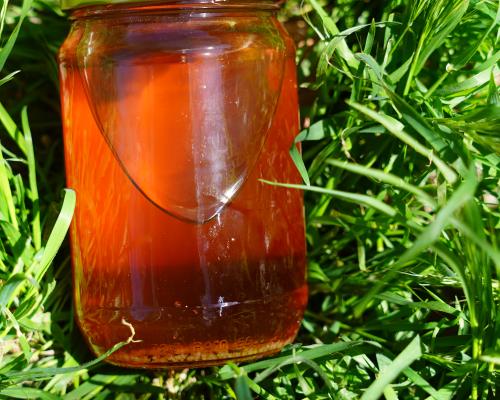
Psara Thyme Honey is an exceptionally high-quality Greek honey, renowned for its intense aroma and the distinctive taste characteristics conferred by the arid climate of the island of Psara. Its production is inextricably linked to the island’s centuries‑old beekeeping tradition, where bees are raised in a pristine natural environment, with endemic thyme (Thymus sp.) as their main source of nectar, making it a monofloral honey of particularly high value.
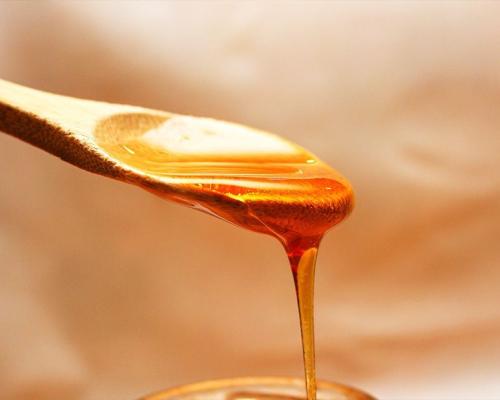
Thyme honey in general is considered a distinct category of blossom honey in Greece, representing over 10% of total Greek honey production due to its strong organoleptic properties. Honey from Psara, in particular, is distinguished by producers for its special character, which is described as an intense aroma of arid island thyme with a flavor reminiscent of “salty caramel,” due to the sea breeze of the Aegean that affects the flowering. Its color is usually amber and its crystallization is relatively slow, ranging from 6 to 18 months.
Psara Thyme Honey is produced on the historic island of Psara, a small and barren island in the Northeastern Aegean, northwest of Chios. The island is characterized by dry, sun‑scorched soil and harsh climatic conditions, with a strong marine influence. These conditions favor the development of particularly aromatic and nectar‑rich thyme (Thymus sp.), whose brief and intense flowering at the beginning of summer, lasting about 40 days, is critical for honey production. The island’s isolation and the absence of intensive crops help preserve a pristine environment, making it ideal for beekeeping and for the production of monofloral thyme honey of high purity.
The production of thyme honey in Psara largely follows traditional methods, with an emphasis on respecting the natural life cycle of the bee. The main nectar collection period, known as the harvest, usually takes place in August, after the thyme has finished flowering. Beekeepers use “melissokipia,” as apiaries are traditionally called in Psara, in areas with a high concentration of arid thyme.
The process includes:
- Seasonality: Thyme blooms at the beginning of summer, with nectar production lasting about 40 days.
- Harvest (Collection): Harvesting is carried out once the honeycombs are mature and sealed, usually from late July to August.
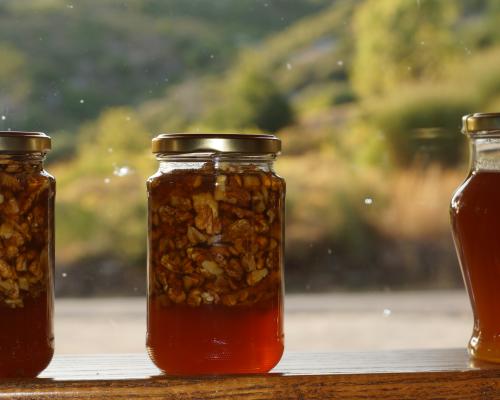
- Extraction: The honey is extracted from the honeycombs using the centrifugation method, without heating to high temperatures, in order to preserve its enzymes, aromas and bioactive compounds intact.
- Filtering and Standardization: This is followed by a light filtering to remove any impurities and then packaging, often without further processing (inversion), so as to maintain its high quality.
Beekeeping by-products on Psara, beyond honey, include propolis (in tincture form) and beeswax, highlighting the full utilization of the bee’s work.
The production of Thyme Honey of Psara constitutes an important pillar of the small island’s rural economy, contributing to the preservation of the rural population and the enhancement of its natural resources. Beekeeping, through the promotion of the local, dry-farmed thyme, directly links the product’s quality with the virgin environment and the microclimate of Psara. The activity contributes to the diversity of local products, strengthening the island’s identity beyond its historical heritage. Examples of modern producers who returned to the island to revive the family tradition demonstrate the impact of beekeeping as a factor of sustainable development and a return to one’s place of origin.
The beekeeping tradition on Psara is deeply rooted, with the practice having been maintained for nearly a century in certain families. Local beekeepers often refer to the revival of their ancestors’ “melissokipia,” using the term to describe the apiary, thus implying a direct link with the old know-how and the traditional production sites. Beekeeping, as one of the few agricultural activities on a predominantly seafaring island, reflects the inhabitants’ ability to make use of every available natural resource, turning the barren landscape into a source of fine products. The traditional knowledge of managing bee colonies under adverse island conditions is part of the intangible cultural heritage of Psara.
Although there are no widely documented specific customs associated with the thyme honey of Psara, honey in general in Greek tradition is closely linked with hospitality, celebrations and religious offerings (as evidenced by ancient Greek inscriptions). On Psara, honey is a key ingredient in local traditional pastries and spoon sweets, offered at important social events. The fact that honey production takes place in August, the height of summer and the tourist season, makes it a symbol of island sweetness and abundance after the aridity of the summer.
Psara Thyme Honey has received international recognition for its quality, constituting an important distinction for the small island.
- Competition: Great Taste Awards (International taste competition)
- Year: 2019
- Distinction: One (1) Star
- Producer: Listed for a specific production, e.g. “Melissokipi Andreas Karagiorgis,” which revives the island’s traditional beekeeping.
This award highlights the high gustatory and qualitative value of Psara honey in the international market.
Thyme honey, including Thyme Honey of Psara, is a dense source of energy and high-quality nutrients, with characteristics derived from general studies of Greek thyme honey. It consists mainly of carbohydrates, predominantly fructose and glucose. The average moisture content of Greek thyme honey is typically low (about 16.3%), indicating excellent maturation and stability.
Micronutrients & Bioactive Components
It is rich in essential trace elements and minerals, including iron, potassium, phosphorus, magnesium and calcium. In addition, it contains bioactive compounds such as phenolic compounds (antioxidants), B-complex vitamins, A and beta-carotene. These compounds confer tonic, antiseptic and antibacterial properties, supporting immune reinforcement and the management of respiratory problems.
Thyme honey, including Thyme Honey of Psara, is a dense source of energy and high-quality nutrients, with characteristics derived from general studies of Greek thyme honey. It consists mainly of carbohydrates, predominantly fructose and glucose. The average moisture content of Greek thyme honey is typically low (about 16.3%), indicating excellent maturation and stability.
Micronutrients & Bioactive Components
It is rich in essential trace elements and minerals, including iron, potassium, phosphorus, magnesium and calcium. In addition, it contains bioactive compounds such as phenolic compounds (antioxidants), B-complex vitamins, A and beta-carotene. These compounds confer tonic, antiseptic and antibacterial properties, supporting immune reinforcement and the management of respiratory problems.