Sesame Oil
Lemnos, known since antiquity as the “granary of the Aegean,” maintains a strong tradition in the cultivation of sesame (Sesamum indicum). Lemnos Sesame Oil is the oil extracted from this local sesame variety, constituting a product of high nutritional value and cultural heritage. Its production, which was historically linked to traditional sesame mills, preserves authentic techniques that give the oil a distinct, intense aroma and flavor, making it an integral part of local gastronomy, particularly in traditional sweets and Lenten dishes.
Lemnos Sesame Oil, also known as Sesame Oil, is produced by pressing the seeds of the local, indigenous sesame variety (Sesamum indicum), which stands out for its light brown seed color and strong aroma. Its uniqueness lies in its origin from a variety adapted to the island’s particular soil and climate conditions and in the traditional method of production.
Specifications and Status
- Identification: Oil produced from the seeds of the local Lemnos sesame variety. It is usually unrefined and aromatic, with a color ranging from light yellow (cold-pressed) to dark brown (if derived from roasted seeds, as is customary for a more intense flavor).
- Basic Quality Specifications:
- Cold Pressing: Preferred for preserving the nutritional components and the high antioxidant content.
- Natural Aroma: Intense, characteristic aroma of roasted sesame (in the case where the oil comes from roasted seeds), which is particularly resistant to oxidation.
Sesame cultivation on Lemnos benefits from the island’s dry, warm climate and fertile soils. Lemnos, being a lowland area with volcanic soil composition, provides ideal conditions for heat-loving sesame. The main cultivated areas are located in lowland and semi-lowland zones where the soil is sandy-loamy and well-drained, factors essential for the successful development of the root system and the quality ripening of the seed. The absence of heavy rainfall during the ripening period (August–September) is critical for avoiding fungal diseases and for shaping the rich aromatic profile.
The production of Lemnos Sesame Oil is closely linked to the traditional agricultural practices of sesame cultivation and the artisanal process of seed pressing.
Cultivation Method (Sesame)
The cultivation of the local sesame variety on Lemnos is considered a laborious and demanding process.
- Sowing & Care: Sowing takes place in spring. Due to the particular requirements of the small seed, multiple and careful hoeings and weedings (manual removal of weeds) are required throughout the growing season to ensure proper development.
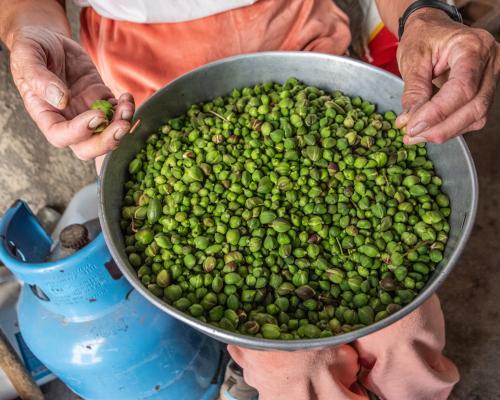
- Harvest: It takes place in September and is traditionally done by hand. The plants are cut, tied into bundles and set up in elaborate stacks (known as “kavakaries” in the Lemnian dialect) for natural sun-drying.
- Post-Harvest Processing: After drying, the bundles are shaken (threshed) to separate the seed from the hull, followed by winnowing in well-ventilated areas for final cleaning.
Production & Pressing Method (Sesame Oil)
- Seed Preparation (optional): For the production of aromatic sesame oil, the seeds may undergo light roasting. This step enhances the aroma and flavor of the final oil, but is not necessary for “white” cold-pressed sesame oil.
- Pressing: The traditional method involves cold pressing (or grinding in stone mills, as with tahini) to extract the oil. Cold pressing, which is carried out at low temperatures, ensures that the valuable fatty acids and antioxidant compounds (lignans, tocopherols) remain intact, giving the oil high nutritional value and natural resistance to oxidation.
- Filtration/Storage: The oil is then lightly filtered and stored in dark containers. A by-product of the process is the press cake (the solid mass), which is used for the production of tahini or animal feed.
The cultivation of sesame and the production of Lemnos Sesame Oil constitute a historic economic pillar for the island’s primary and artisanal sector. In the 1950s, sesame together with cotton were the only industrial products of Lemnos that could be commercialized and exported in large quantities. Today, the preservation of the local variety and traditional processing contributes to maintaining the agrobiodiversity of Lemnos, strengthens local small-scale industry (production of tahini/sesame oil) and differentiates the island’s agricultural products on the market, contributing to the qualitative identity of Lemnian Land.
The use of sesame and sesame oil in Lemnos is of ancient Greek origin. Lemnos has always been renowned for its aromatic sesame oil, which, together with sesame, was known to the ancient Greeks and was used both as food and as a cosmetic or medicine. The centuries-old tradition of cultivating the local variety and the know-how in milling in traditional sesame mills form part of the island’s cultural heritage. Cultivation flourished until the mid-20th century, confirming its role as a key product of the Lemnian economy.
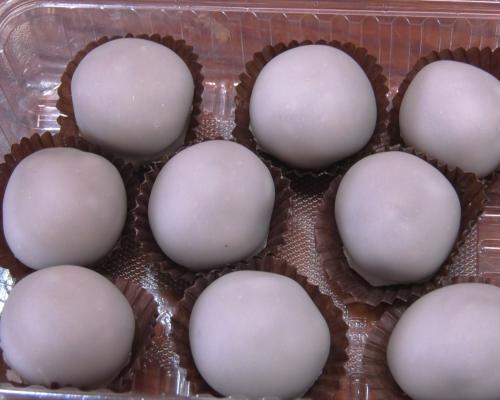
Sesame oil, due to its plant-based origin, is inextricably linked with the fasting diet of Orthodoxy, and especially with Lent. In Lemnos, it is traditionally used as a substitute for butter or olive oil in sweets and baked goods during fasting periods. The preparation of Samsades (samousades), the island’s traditional syrupy sweet, was required to be done with sesame oil on fasting days, highlighting the adaptation of local customs to the agricultural production cycle.
Lemnos Sesame Oil is considered one of the most nutritious vegetable oils, with its nutritional value approaching that of olive oil, but with a significantly different fatty acid profile and bioactive compounds.
- Macronutrients: The oil consists of 100% fats.
- Fatty Acids: It has a high content of unsaturated fats, mainly:
- Polyunsaturated Fats: (≈40%−45%) primarily Linoleic acid (Omega-6).
- Monounsaturated Fats: (≈35%−40%) primarily Oleic acid (Omega-9).
- The balance of these fatty acids contributes to the reduction of LDL (“bad”) cholesterol.
- Fatty Acids: It has a high content of unsaturated fats, mainly:
- Bioactive Compounds & Micronutrients:
- Lignans: The most critical group of compounds. It is rich in sesamin and sesamolin, potent antioxidant components that give sesame oil exceptional stability against autoxidation and have been studied for their cholesterol-lowering and antihypertensive effects.
- Tocopherols (Vitamin E): Sesame oil is particularly rich in gamma-tocopherol, an isomer of Vitamin E, which has stronger antioxidant activity compared to other isomers.
- Minerals: Despite being an oil, it retains traces of important minerals such as Zinc and Magnesium.
Lemnos Sesame Oil is considered one of the most nutritious vegetable oils, with its nutritional value approaching that of olive oil, but with a significantly different fatty acid profile and bioactive compounds.
- Macronutrients: The oil consists of 100% fats.
- Fatty Acids: It has a high content of unsaturated fats, mainly:
- Polyunsaturated Fats: (≈40%−45%) primarily Linoleic acid (Omega-6).
- Monounsaturated Fats: (≈35%−40%) primarily Oleic acid (Omega-9).
- The balance of these fatty acids contributes to the reduction of LDL (“bad”) cholesterol.
- Fatty Acids: It has a high content of unsaturated fats, mainly:
- Bioactive Compounds & Micronutrients:
- Lignans: The most critical group of compounds. It is rich in sesamin and sesamolin, potent antioxidant components that give sesame oil exceptional stability against autoxidation and have been studied for their cholesterol-lowering and antihypertensive effects.
- Tocopherols (Vitamin E): Sesame oil is particularly rich in gamma-tocopherol, an isomer of Vitamin E, which has stronger antioxidant activity compared to other isomers.
- Minerals: Despite being an oil, it retains traces of important minerals such as Zinc and Magnesium.