thyme honey of Lesvos
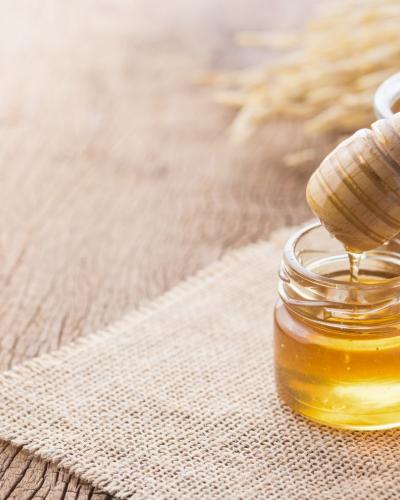
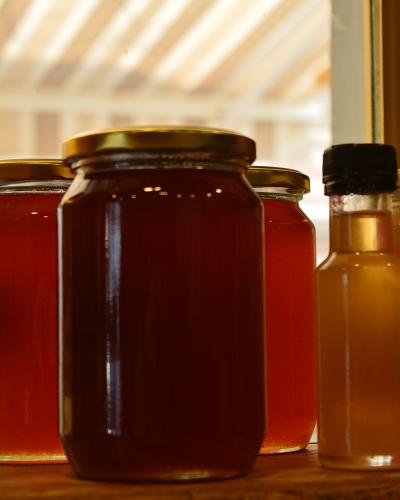
The thyme honey of Lesvos is one of the island’s finest beekeeping products, synonymous with the wild vegetation and the hot, dry climate of the area, especially in western Lesvos around the Petrified Forest and Sigri. Beekeeping on Lesvos has a long history and is closely linked to the rich variety of flora, dominated by low shrubs (phrygana) and aromatic herbs. Thyme honey is produced mainly during the summer months from the nectar of thyme (Thymus spp.), a plant that thrives in the arid, rocky and volcanic soils of the island, imparting to the honey a strong aroma, amber color and high nutritional value.
Lesvos Thyme Honey is identified as a monofloral honey, although it is often combined with wildflowers and other aromatic plants (such as oregano, lemon balm) that abound in the same area, leading to variations such as “Wildflower & Thyme Honey.” The uniqueness of Lesvos thyme honey is due to the particular soil and climate conditions of the western part of the island, with the volcanic soils of Sigri and the dry, warm climate, which intensifies the production of essential oils in the plants, thus transferring to the honey a particularly robust, strong and persistent aroma and a slightly spicy, resinous taste that leaves a characteristic burning sensation in the mouth.
The production of thyme honey on Lesvos is mainly concentrated on the western side of the island, an area characterized by the Lesvos Petrified Forest and the surrounding villages, such as Sigri and Skalochori. This area has a hot, dry climate and volcanic soils, which are poor in organic matter but rich in minerals, creating ideal conditions for the development of phrygana vegetation and thyme (Thymus capitatus). The intense, prolonged summer sunshine in western Lesvos promotes the maximum secretion of nectar from thyme blossoms, ensuring the high concentration of thyme pollen in the final product.
The production of thyme honey on Lesvos follows traditional beekeeping practices, combining nomadic beekeeping with modern standardization, in order to ensure monoflorality and quality.
Collection Method & Seasonality
- Soil and Climate Requirements & Placement: Beekeepers move their hives to the thyme-covered areas of western Lesvos (e.g. Sigri) shortly before the main flowering of thyme, which usually takes place in June and July. The choice of location is critical, so that there is a sufficient area with thyme blossoms for the bees to collect nectar.
- Collection Technique: The honey is collected when the water (moisture) content in the honey has dropped below 18% (ideally ≤17%), a sign that it is ripe and suitable for extraction. Harvesting usually takes place from late July to early August.
- Traditional Tools and Processing: The extraction is carried out carefully so that the thyme honey does not mix with other blossom honeys. The honey is extracted from the combs by centrifugation (honey extractors), a process that is the most widespread. This is followed by natural filtration (straining) to remove wax and other foreign matter.
Standardization and By-products
The honey is standardized at low temperatures, without overheating, in order to preserve its nutritional components. The beekeeping units of Lesvos also produce a range of by-products related to health and nutrition:
- Pollen: From wildflowers and herbs of the Lesvian flora.
- Royal Jelly: A product of high nutritional value.
- Propolis: A natural antiseptic from the hives.
- Beeswax/Honeycomb Wax: Used for cosmetics and wax ointments, usually in combination with Lesvos olive oil.
Beekeeping, and particularly the production of thyme honey, has a multifaceted impact on Lesvos. First, it is an important source of income for small and medium-sized beekeepers, many of whom are organized in Cooperatives (e.g., the Beekeeping Cooperative of Lesvos) with the aim of standardizing and distributing the product. Second, it contributes significantly to rural development and the preservation of the natural environment, as bees are vital for the pollination of the island’s unique flora. Third, the development of visitable beekeeping workshops (especially in western Lesvos) and tasting events (such as the event “Honey in the Petrified Forest”) strengthens agritourism and highlights local identity, linking honey with the unique geological monument.
Beekeeping on Lesvos is an age-old activity, part of the island’s rural life and economy for centuries. The practice of nomadic beekeeping, that is, moving the hives according to flowering (initially citrus/wildflowers in the spring and then thyme in the summer), is a traditional technique that is preserved to this day. Historically, honey, together with olive oil and wine, was one of the main products of diet and trade. The cultural heritage is evident in oral tradition and traditional recipes, where honey was the primary sweetener. In modern times, institutions such as the Natural History Museum of the Lesvos Petrified Forest highlight the historical connection of honey with the nature of the place through scientific and cultural activities.
Customs surrounding honey on Lesvos are, as throughout all of Greece, connected with the cycle of life and religious celebrations. Honey was traditionally used in ritual sweets for weddings and baptisms.
- Wedding Sweets: In many villages, honey was a basic ingredient in confections offered to guests, symbolizing the sweet life of the couple.
- Old Pharmacopoeia: Thyme honey, due to its antiseptic and tonic properties, was used as a natural medicine to soothe coughs, flu, and to strengthen the nervous system, a practice that forms part of the island’s folk medical tradition. It was often combined with herbs from Lesvos (e.g., sage or mountain tea).
Thyme honey from Lesvos, like all thyme honey, belongs to blossom honeys and is known for its high fructose content and its strong bioactive properties.
Greek thyme honey in general, and by extension that of Lesvos, is characterized by:
- Carbohydrates (≈80%): Mainly fructose and glucose in high concentration, with fructose predominating, something that delays its crystallization (6–18 months). The high fructose content contributes to the characteristic burning sensation in the throat.
- Moisture: Low, usually ≤17%, which ensures long-term preservation.
- Minerals & Trace Elements: It is rich in trace elements such as Copper, Zinc, Magnesium, Calcium, Iron and Manganese.
- Bioactive Compounds: High content of Phenolic Compounds (e.g., flavonoids) due to the presence of thyme essential oils, which confer strong antioxidant activity, making it one of the most powerful antioxidant honeys.
Thyme honey from Lesvos, like all thyme honey, belongs to blossom honeys and is known for its high fructose content and its strong bioactive properties.
Greek thyme honey in general, and by extension that of Lesvos, is characterized by:
- Carbohydrates (≈80%): Mainly fructose and glucose in high concentration, with fructose predominating, something that delays its crystallization (6–18 months). The high fructose content contributes to the characteristic burning sensation in the throat.
- Moisture: Low, usually ≤17%, which ensures long-term preservation.
- Minerals & Trace Elements: It is rich in trace elements such as Copper, Zinc, Magnesium, Calcium, Iron and Manganese.
- Bioactive Compounds: High content of Phenolic Compounds (e.g., flavonoids) due to the presence of thyme essential oils, which confer strong antioxidant activity, making it one of the most powerful antioxidant honeys.