Touloumotyri Samou
Touloumotyri is one of the most distinctive and historic cheese products of Samos, embodying the tradition of Aegean livestock farmers in the art of preserving and maturing cheese. It is a traditional, white, soft to semi-hard cheese with an intensely spicy and slightly sour taste, which owes its name and uniqueness to the way it is matured inside a “touloumi”, that is, in a processed animal hide (usually goat or sheep). Although Touloumotyri as a general category is produced in various regions of Greece (such as Macedonia, Thessaly, Lesvos), Samian Touloumotyri is inextricably linked to the quality of the milk produced by the local sheep and goat breeds of the island. This process is not merely a method of maturation, but an ancient technique for preserving surplus milk production, yielding a product with a long shelf life and distinctive organoleptic characteristics.
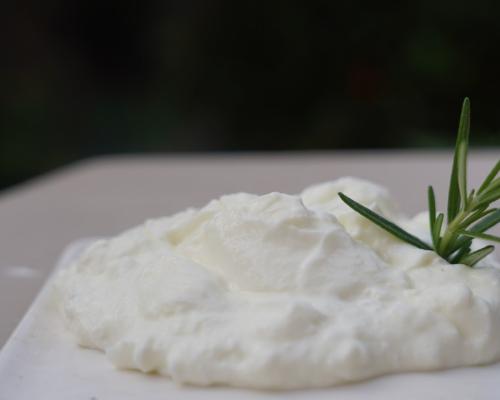
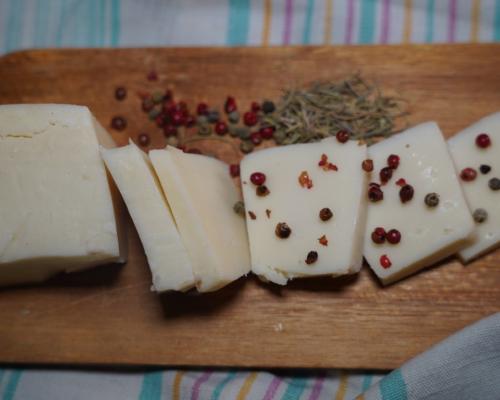
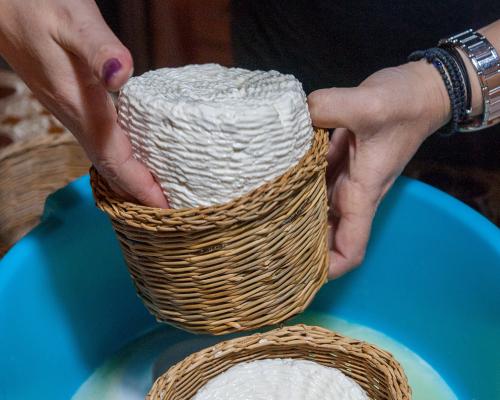
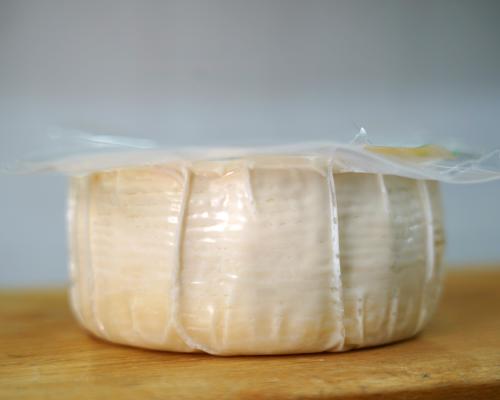
Samian Touloumotyri is a cheese that stands out for its traditional identity and its gustatory intensity. Synonyms of the product in Greece include “Cheese of the Touloumi” or, in other regions, “M’tsi”. This cheese is essentially a type of feta or white cheese which, instead of maturing in brine, matures in an airtight environment inside the leather sack. Its color ranges from off-white to yellowish and its texture is soft and creamy when fresh, but can become more compact as it matures. Its taste is described as intense, slightly sour, and mildly spicy, characteristics that derive from contact with the hide and the particular microflora that develops within it.
The production of Touloumotyri in Samos is traditionally associated with the mountainous and semi-mountainous livestock-farming areas of the island, where local sheep and goat breeds graze freely, feeding on the rich and aromatic flora of Samian soil. The geographical area includes mainly the central and western mountainous parts of Samos. The quality of the milk, which forms the basis of the cheese, is directly affected by the island’s particular microclimate, characterized by a wide variety of aromatic plants and herbs. This vegetation, combined with dry and rocky soils, gives the milk a high content of fats and proteins, as well as a rich aromatic palette that is ultimately transferred to the cheese.
The production method of Samian Tulumotyri follows ancient cheesemaking practices and is an outstanding example of traditional know-how.
- Coagulation and Draining: The process begins with the coagulation of pasteurized or raw sheep/goat milk using rennet. This is followed by breaking the curd and draining it, usually in cheesecloths, until it reaches the appropriate dry matter content.
- Salting and Kneading (Preparation): The drained cheese is salted and then often crumbled (broken) into small pieces, in order to facilitate the maturation process.
- Placing in the Tulum (The Skin Bag): The element that makes Tulumotyri unique is its maturation. The cheese is placed in a tulum—a bag made from goat or sheep skin that has undergone meticulous processing (cleaning, disinfection, salting) to make it suitable for food use. The hairy part of the skin is traditionally on the inside of the bag.
- Maturation and “Watering”: The bag is tied airtight and left to mature in a cool and slightly ventilated area. During maturation (which lasts from three to seven months), traditional cheesemakers often “water” the cheese with milk or whey, or simply with the serum released by the cheese itself. This process is vital, as it enriches and softens the cheese, while at the same time the interaction of the cheese with the skin and the anaerobic fermentation create the characteristic intense, piquant flavor and rich aromas.
The production of Tulum cheese on Samos has a profound and multifaceted impact on the local economy and cultural identity. The preservation of this traditional cheesemaking strengthens the island’s livestock farming, offering high added value to local milk and supporting small, family-run production units in the mountainous areas. Tulum cheese serves as a gastronomic ambassador of Samos, differentiating local products beyond the famed wine. Its authentic taste and traditional history contribute to the qualitative upgrading of agritourism and the promotion of local gastronomy, while the tulum method itself preserves an ancient technique that would otherwise be lost.
The production of cheese in leather bags is lost in the depths of Greek and Mediterranean history, constituting one of the oldest methods of preserving cheese. The name “Touloumi” comes from the Turkish word tulum, which means wineskin or leather sack, indicating the widespread use of this technique in the broader region of the Balkans and the Middle East. On Samos, as in other parts of insular Greece, Tulum cheese became closely linked to nomadic or semi-nomadic livestock farming, since the leather bag was the most practical, durable and portable container for transporting and simultaneously maturing the cheese, especially during the summer months. This tradition attests to the resourcefulness of rural societies in exploiting natural resources to secure long-lasting food.
Touloumotyri is deeply rooted in the livestock-breeding traditions of Samos. Its production process has always been a family craft and ritual, passed down from generation to generation, with women often playing a leading role in preparing the skin bag and curdling the milk. The tulum itself, as the final container, was usually a handmade product and required special knowledge and care for its proper disinfection and preservation. Touloumotyri was the cheese of “storage” and of “hard work,” the one that ensured protein during the winter or in times of scarcity. Its consumption was often associated with festivals or large gatherings, where its intense flavor made it the ideal accompaniment to local ouzo or souma.
As a cheese usually made from goat’s milk (known for its high nutritional value) and subjected to prolonged maturation, Tulumotyri is a food rich in nutrients.
- Macronutrients: It is exceptionally rich in high biological value proteins, which, due to maturation, are broken down, making the cheese more digestible and more easily absorbed by the body. Its fat content is high, corresponding to the use of whole milk, although it is often considered “lighter” compared to hard, yellow cheeses.
- Bioactive Compounds and Micronutrients: Tulum cheese is an important source of calcium and phosphorus, which are essential for bone health. It also contains B-complex vitamins (especially B2 and B12), which are important for the proper functioning of the nervous system and metabolism. Due to the extensive fermentation, its lactose content is very low, making it tolerable for people with intolerance.
As a cheese usually made from goat’s milk (known for its high nutritional value) and subjected to prolonged maturation, Tulumotyri is a food rich in nutrients.
- Macronutrients: It is exceptionally rich in high biological value proteins, which, due to maturation, are broken down, making the cheese more digestible and more easily absorbed by the body. Its fat content is high, corresponding to the use of whole milk, although it is often considered “lighter” compared to hard, yellow cheeses.
- Bioactive Compounds and Micronutrients: Tulum cheese is an important source of calcium and phosphorus, which are essential for bone health. It also contains B-complex vitamins (especially B2 and B12), which are important for the proper functioning of the nervous system and metabolism. Due to the extensive fermentation, its lactose content is very low, making it tolerable for people with intolerance.