Trahanas
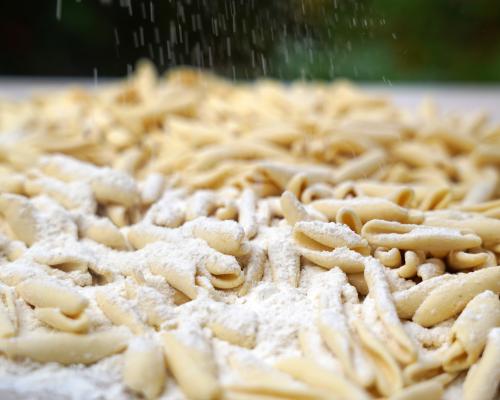
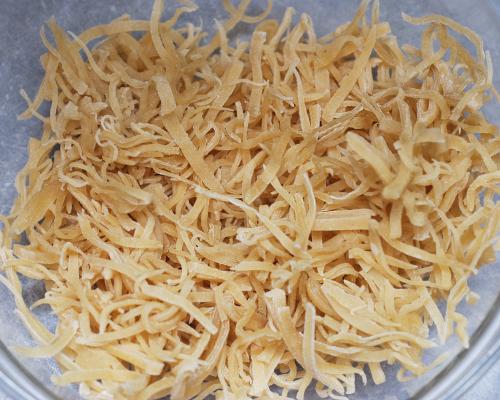
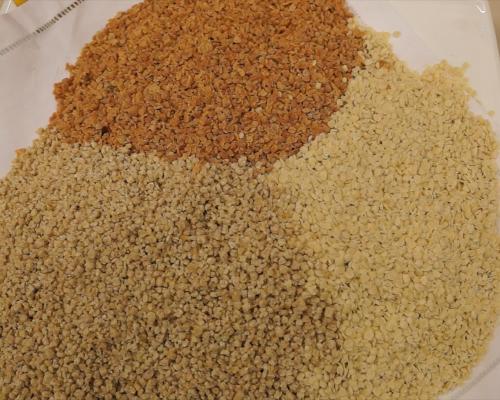
Trahanas, one of the oldest and most characteristic Greek pasta products, is made from a dough of flour and semolina that is kneaded with milk or yogurt and then dried and granulated. In Chios, trahanas is a traditional handmade soup that combines the nutritional value of grains and dairy products. Its final form is irregular and granular, with grains about 2–3 millimeters in diameter. Traditionally, it is consumed mainly as a thick or thin soup, constituting a complete and filling meal.
Chian trahanas differs significantly from common Greek trahanas, since beyond the basic ingredients (durum wheat flour, semolina, yogurt/milk), it incorporates tomato (concentrated tomato paste) and the local herb “trachanochorto” (or trachanohorti), along with olive oil and onion, giving it a slightly sour yet aromatic taste. The addition of trachanochorto, apart from its aromatic effect, is said to accelerate the fermentation process of the trahanas, a technique that showcases local know-how.
The traditional production of Chian trahanas is closely linked to the island’s rural settlements, particularly the region of Mastichochoria, where modern workshops also operate that preserve the traditional method of preparation. Indicatively, producers cite as their base the village of Vessa in the Municipality of Mastichochoria. The composition of the product with tomato and trachanochorto indicates the use of local agricultural products that thrive in the soil of Chios, highlighting the strong bond with its geographical origin.
The production of Chian trahanas follows the classic traditional pasta-making process, with the key characteristic being the use of local ingredients:
- Preparation of raw materials: The process begins with kneading the basic ingredients, which are durum wheat flour and semolina, with milk or yogurt (usually cow’s or goat’s). Its distinctiveness lies in the addition of concentrated tomato paste, olive oil, onion, and trachanochorto, which, as mentioned, accelerates fermentation and imparts a unique aroma.
- Kneading and rubbing (granulation): Once the dough is formed, it was traditionally rubbed by hand on coarse sieves or sieves with a wide mesh so that it acquires its characteristic irregular, granular shape.
- Drying and Storage: The dough grains were spread out on trays with stainless steel mesh and left to dry thoroughly, usually in a shaded and well-ventilated area. Proper drying is vital for the long-term preservation of the product, as it reduces the moisture content, creating an environment inhospitable to microorganisms, without the need for preservatives.
- Standardization: After complete drying, trahana is packaged, ready for consumption, while retaining its high nutritional value.
Trachanas in Chios is an important element of cottage industry and small-scale production, contributing to the preservation of traditional agricultural practices and to the economic diversification of the island beyond mastic. Its production makes it possible to utilize local products, such as milk from local livestock farming, olive oil and vegetables (tomatoes, onions, trachanohorto), thereby strengthening the local value chain. In addition, its sale as a traditional Chian product contributes to the promotion of the island’s gastronomic culture in tourism.
Trachanas is a product with deep roots in the Greek, and more broadly in the Mediterranean and Eastern, diet, dating back to the Byzantine era (when it was known as trachanos or trachanogkostos). In Chios, as in other parts of Greece, trachanas has always been a basic survival food, as it was inexpensive, easy to prepare and could be preserved for a long period. Its traditional preparation usually took place in the summer months, when milk was abundant and proper drying could be ensured, and it involved a collective effort by the women of the family or the neighborhood, securing the winter supplies.
As a filling, warming soup, trachanas is the ideal dish for cold days and nights, often serving as the evening meal of the rural family. In its Chian variations, the addition of cheese (feta, xinomyzithra or goat’s cheese) and poached eggs elevates it from a simple soup to a complete meal, linked to traditional hospitality and to the modest yet nutritious diet of the island.