Vitex Honey of Lygaria
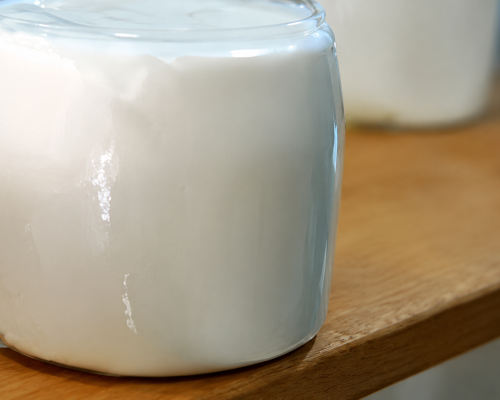
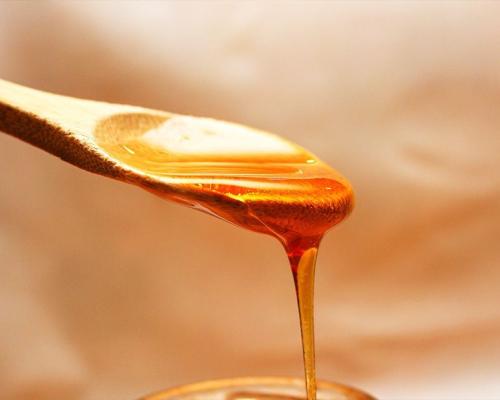
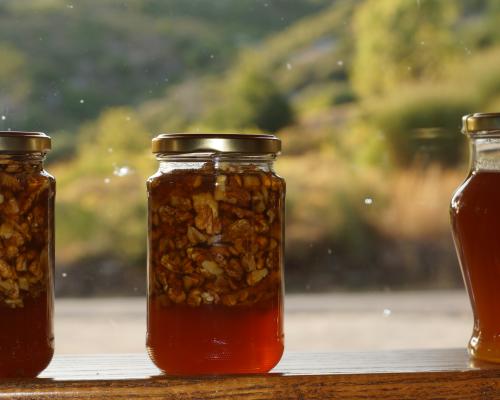
Vitex Honey is a distinctive monofloral honey that comes from the nectar of the plant Vitex agnus-castus, a shrub found mainly near water sources, streams and beaches. The designation “White” that is often used does not refer to its original color, but to its rapid crystallization into a beige-white, buttery texture, which is its hallmark. Its production on Agios Efstratios makes use of the island’s local flora and traditional beekeeping practices. Due to the island’s pristine environment and isolation, the product has the potential to bear unique local characteristics.
Vitex Honey is an aromatic honey with a delicate, particularly herbal flavor that is usually less sweet and sometimes slightly bitter compared to other blossom honeys. Its texture is the main differentiating element, as due to its high glucose content it crystallizes quickly at room temperature, acquiring an off-white to beige color and a creamy, buttery consistency that makes it easy to spread. Vitex is traditionally known for its hormone-balancing properties, mainly for women, properties that are partly attributed to the honey as well. Synonymous names used are “Chaste Tree Honey” or “Creamy Vitex Honey” due to its texture.
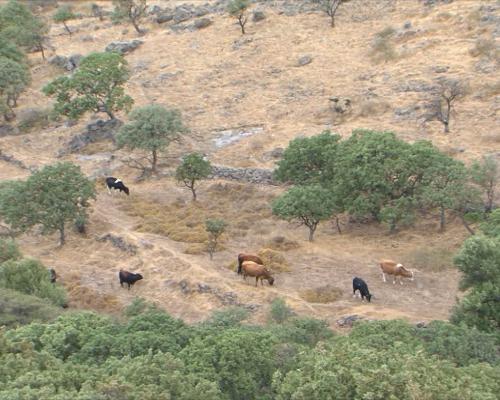
Agios Efstratios is part of the NATURA 2000 network as a Special Protection Area, which ensures a well-preserved and unpolluted ecosystem, crucial for the quality of the honey. The main nectar source for the honey is Vitex (Vitex agnus-castus), which grows in small wetlands and along streams. The summer flowering (July–August) of Vitex, combined with the barren, semi-mountainous landscape and the limited other vegetation (apart from scattered oaks and low shrubs), enhances the monofloral character of the honey, minimizing mixing.
The production of Vitex honey on Agios Efstratios follows traditional beekeeping practices for summer monofloral honeys, within an environment with limited floral diversity.
Seasonality is specific: the flowering of chaste tree (Vitex agnus-castus) peaks from mid-July to late August, a period during which the hives are placed close to clusters of the plant. Exploitation requires strong bee colonies, while the island’s isolation favors the monofloral character of the nectar.
After the honey has matured inside the hive, harvesting (extraction) follows at the end of summer using centrifugation (honey extractor). Chaste tree honey is renowned for its rapid crystallization. To achieve the desired texture, controlled crystallization (creaming) can be applied, i.e. stirring at low temperature so that it acquires a white, buttery consistency. Production on the island is usually small-scale and carried out without heat treatment, preserving its aromas and nutrients.
Beekeeping, especially the production of monofloral honeys such as Chaste Tree honey, on Agios Efstratios, has a significant impact, mainly due to the island’s small scale. Owing to its NATURA 2000 status, beekeeping promotes biodiversity and functions as a low-impact economic activity, helping to preserve rural life on a remote island. The production of a unique local product (white chaste tree honey) strengthens local identity and agritourism. The sale of the honey, whether to the few residents or to visitors, is a small but steady source of income for the few beekeepers, contributing to the economic survival of the local community, especially as agricultural land is limited and the main vegetation consists of oak trees.
The Chaste Tree (Vitex agnus-castus) has a long history in Greece and the Mediterranean. Its name (agnus-castus) is associated with chastity, as in antiquity its leaves were used in rituals of purity. In ancient Greece, the Chaste Tree was known for its healing properties and its use as a hormonal regulator, mainly for women’s health (regulating the menstrual cycle, addressing menopausal symptoms).
On Agios Efstratios, traditional beekeeping is an activity which, although small in scale, has been passed down from generation to generation, making use of the island’s pristine flora. The presence of the Chaste Tree in the island’s streams and wetlands (as mentioned in the Natura 2000 studies) indicates the traditional use of the area for the production of this particular honey during the hot summer months.
The consumption of honey is part of the broader island-based dietary tradition of the Aegean:
- Sweets and Treats: Honey is traditionally used in local sweets, such as pasteli (with sesame) and loukoumades, or as a sweetener in tea and coffee.
- Dowry and Hospitality: Honey, as a precious good, was part of the dowry or offered as a treat to visitors, as a sign of hospitality and wishes for good health.
- Therapeutic Use: As in the rest of Greece, Chaste Tree honey was traditionally used as a tonic and for the relief of sore throat and cough.