Lesvos Feta
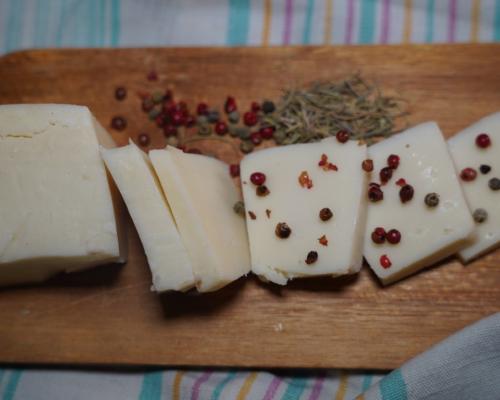
Feta is a traditional white brined cheese, characterized by its soft texture, the irregular holes in its body, and its slightly sour, salty and rich flavor. Its production on Lesvos is inextricably linked to the island’s extensive sheep and goat farming. Lesvos, thanks to its particular soil and climatic conditions and its rich biodiversity, produces sheep and goat milk with distinctive organoleptic characteristics, which are transferred intact to the cheese. Lesvos Feta preserves the authenticity of traditional cheesemaking, constituting a product of high nutritional value and cultural significance for the local community.
Feta is a Protected Designation of Origin (PDO) at European Union level. This means that the name “Feta” may be used exclusively for cheese produced in Greece, in specific regions, in accordance with the defined specifications.
The basic specifications of PDO Feta, to which the product of Lesvos is also subject, are as follows:
- Raw Material: It is made exclusively from sheep’s milk or a mixture of sheep’s and goat’s milk. The proportion of goat’s milk must not exceed 30% of the mixture. The use of cow’s milk, milk powder or other added proteins is prohibited.
- Maturation: The total maturation time lasts at least two (2) months.
- Method of Preservation: It is a white soft brined cheese, meaning it is preserved in brine, either in metal tins or in traditional wooden barrels (a factor that affects flavor and aroma).
- Chemical Characteristics: Maximum moisture must not exceed 56%, while fat content in dry matter must be at least 43%.
The geographical production area of PDO Feta is strictly delimited and includes the regions of Macedonia, Thrace, Epirus, Thessaly, Central Greece, the Peloponnese and the Prefecture of Lesvos.
Specifically for Lesvos, the uniqueness of the product lies in the milk, which must come exclusively from sheep and goat breeds that are traditionally reared and fully adapted to the area. The animals’ diet is based on the island’s natural flora (grass, herbs, shrubs), which is rich and influenced by Lesvos’ dry, warm climate and volcanic soil. This diet imparts to the milk and, by extension, to the Feta, particularly distinctive organoleptic characteristics and a pleasant aroma, making Lesvos Feta a cheese with a strong local identity within the broader PDO framework.
The production of Feta on Lesvos follows the traditional technology defined in the PDO dossier. The process consists of the following critical stages:
- Coagulation of the Milk: The fresh or pasteurized sheep and goat milk (with a maximum of 30% goat’s milk) is coagulated by adding rennet at a temperature of about 32−34°C. In the case of pasteurized milk, lactic acid cultures are also added to develop the desired flavors.
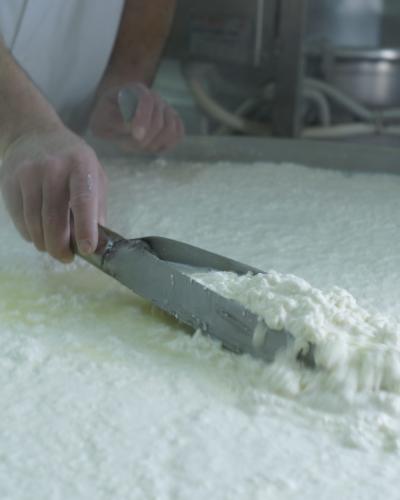
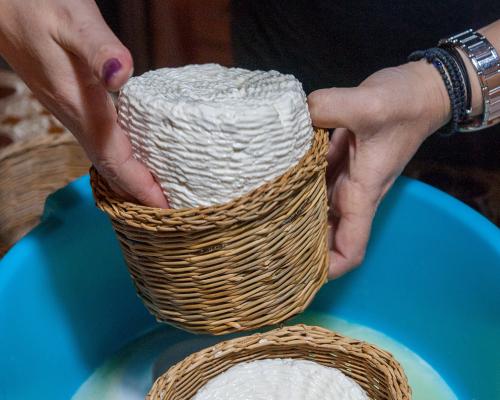
- Cutting and Draining: The curd is cut and left to drain naturally in special molds (tyrovolia) without heating or pressing. Inside the molds the curd acquires its characteristic shape and irregular openings. During draining, salting is also carried out with dry salt on the surface of the cheese.
- Initial Maturation: The cheeses are placed for a period of 10–15 days under controlled temperature and humidity conditions, during which the formation of the cheese is completed and the first aromatic characteristics develop.
- Maturation in Brine: After the initial maturation, the cheese is cut into pieces and placed in metal containers or wooden barrels and covered with brine (a solution of salt in water). The Feta must remain in the brine for at least two (2) months. The time spent in brine is critical for preservation, the final texture, and the development of the characteristic salty, slightly sour taste and rich aroma.
The production of PDO Feta has a central impact on the rural economy and the cultural identity of Lesvos. The inclusion of Lesvos in the geographical delimitation of the PDO protects the local product from imitations and strengthens its export potential, safeguarding the added value that is due to the quality of Lesvos milk.
Sheep and goat farming, which supplies the dairies, is a key source of income for the inhabitants of rural areas. The obligation to use local milk contributes to the preservation of livestock and traditional free-range rearing methods, which in turn maintain the balance of the natural ecosystem and the landscape. Finally, Lesvos Feta, together with Ladotyri Mytilinis PDO, are gastronomic ambassadors of the island, enhancing gastronomic tourism and the image of Lesvos as a place that produces authentic, high-quality products.
Feta is a cheese with a history that is lost in antiquity, as it is already mentioned by Homer in the Odyssey, where the Cyclops Polyphemus made a similar cheese from sheep’s milk and stored it in woven baskets. The modern name “Feta” (which means slice/piece) appeared in the 17th century, probably referring to the way the cheese was cut in order to be placed in barrels.
In Lesvos, Feta production has a centuries‑old tradition, based on the abundance of sheep’s milk. The traditional cheesemakers of Lesvos developed the technique of brined cheese, using their knowledge of the local milk and the island’s climatic conditions. The know-how of proper coagulation, salting and maturation in brine (often in barrels for a more intense flavor) is part of the island’s intangible cultural heritage, kept alive in modern dairies that observe the PDO specifications.
Feta is an integral part of everyday Lesvian diet and hospitality.
In rural customs, the quality of the milk and cheese is directly linked to seasonality. The peak period of milk production, from spring to summer, marked the time of abundant Feta production, which had to be preserved in brine to cover the needs of the whole year. Cheesemaking was often a family or community process, where cooperation was essential. Feta is also the quintessential cheese accompanying every festive table and local fair in Lesvos, either as an ingredient in pies or as a simple meze next to Mytilene ouzo, reinforcing the notion of togetherness and abundance.