Mastiha
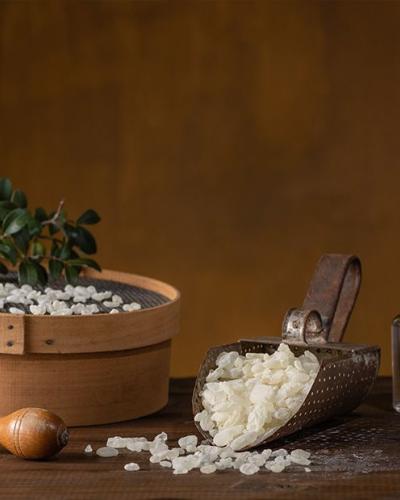
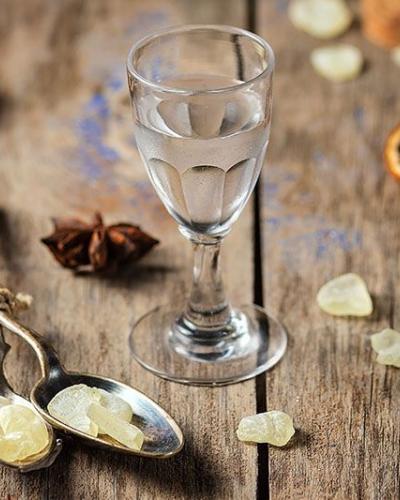
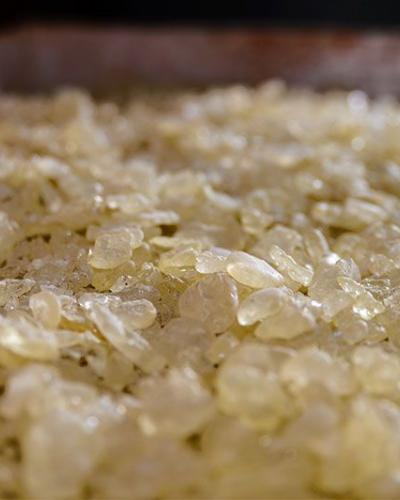
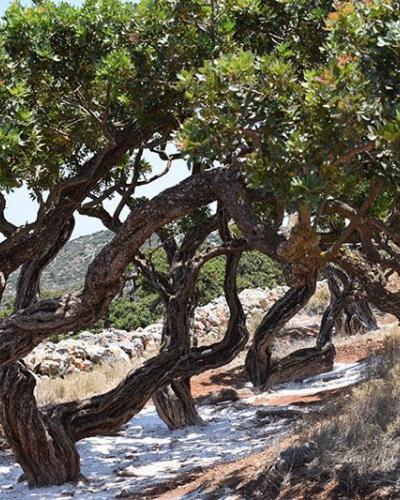
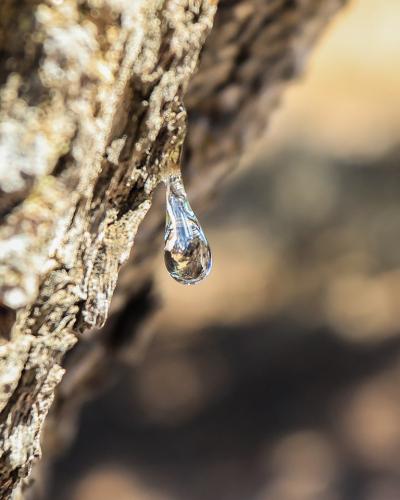
Chios Mastiha is one of the most recognizable and historic Greek PDO (Protected Designation of Origin) products, with unique characteristics that are owed exclusively to the special geographic environment and traditional cultivation of southern Chios. It is an aromatic resin that is secreted in the form of “tears” from the trunk and branches of the mastic tree (Pistacia lentiscus var. Chia), an evergreen shrub, and it is known worldwide for its aroma, taste, and therapeutic properties.
Chios Mastiha, also known as the “Tear of Chios,” is the natural resin obtained in a traditional way from the Pistacia lentiscus var. Chia variety. Its uniqueness lies in the worldwide exclusivity of its production, since, although the mastic tree grows in other Mediterranean countries, only in southern Chios does it produce this specific aromatic resin, a fact attributed to the combination of the peculiar microclimate, the soils, and the methodical, traditional cultivation know-how that has been developed over centuries.
Chios Mastiha has been recognized as a Product of Protected Designation of Origin (PDO) by the European Union, a recognition that confirms the close connection of its quality with its geographical origin.
- PDO/PGI status: Protected Designation of Origin (PDO).
- Year of Recognition: 1997, pursuant to Regulation (EC) No. 123/1997.
- Key Specifications:
- Production, processing and handling must take place within the defined geographical area (Southern Chios).
- The packaging of mastiha is permitted only within the boundaries of the Prefecture of Chios.
- Bulk offering and sale to the final consumer is prohibited; it is only allowed in pre-packaged form, in such a way that the contents cannot be altered without breaching the packaging (Article 94, Rules for the Movement of Products).
The geographical production area of Chios Mastiha is limited exclusively to the 24 Mastiha Villages (Mastichochoria) of southern Chios and, more specifically, to the villages of Vavyli, Vessa, Elata, Mesa and Exo Didyma, Tholopotami, Thymiana, Kalamoti, Kallimasia, Karies, Katarraktis, Koini, Leivadia, Lithio, Mesta, Nenita, Olympoi, Patrika, Pyrgi, Skoupia, Aipos, Agioi Theodoroi, Agios Georgios Sikousis, Armolia. This area is characterized by a peculiar dry and warm microclimate, with moderate humidity and specific calcareous, volcanic soils with low organic matter, which, in combination with the proximity to the sea, create the ideal environment for the mastic tree (schinos). This extremely limited geographical range is the fundamental factor for the exudation of the precious resin, as well as the reason for the historical fortification of the Mastiha Villages by the Genoese for the protection of the product.
The cultivation of Chios Mastiha follows a traditional method that has remained almost unchanged through the centuries, having been recognized as Intangible Cultural Heritage of Humanity by UNESCO in 2014. The process is laborious, manual, and lasts from January to September, comprising four main stages:
- Spreading of White Soil/Preparation (June): First, the producers clean and level the ground around the trunk of the mastic tree (the “table”) and spread a layer of white soil (white calcium carbonate). This layer is crucial, as it prevents the resin from mixing with the earth and allows the mastiha to solidify into pure “tears.”
- Scoring (July – August): This is the most important phase. With special sharp tools, such as the kentitiri, small incisions (wounds) are carefully made on the trunk and branches of the tree, from which the resin begins to flow. This process is carried out gradually, often over a period of 75 days, so that the “tear” of the mastic tree is released.
- Gathering (August – September): After the resin has solidified and set (after 15–20 days), the harvest begins. Initially, the thick mastiha or “pitta” is collected from the “table” and then the smaller “tears.” Traditional tools, such as timitiria (special collection containers) and wicker baskets, are used for gathering. The collected mastiha is stored in cool places.
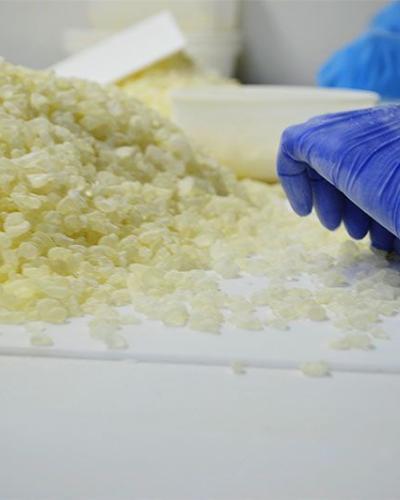
- Cleaning (Processing): This is a painstaking and detailed process of sorting and cleaning. The mastic is cleaned of foreign matter and impurities, washed, dried, and separated by size and quality. Traditionally, the cleaning was (and to some extent still is) done by hand, using pointed little knives and sieves, before being delivered to the Chios Gum Mastic Growers Association (EMX) for final processing and standardization.
Chios Mastiha is the main economic pillar of the island and its quintessential brand name. The cultivation, processing, and trade of mastiha contribute significantly to the income of thousands of families living in the Mastiha Villages, thus preserving the rural population and local identity. Management of the product is carried out exclusively by the Chios Gum Mastic Growers Association (CGMGA), a cooperative body that controls all stages, from collection to standardization and worldwide export. Furthermore, the uniqueness of the product and its cultural heritage act as a catalyst for tourism development, attracting visitors who wish to experience the production process and the medieval Mastiha Villages firsthand, with the Chios Mastiha Museum serving as a major attraction.
The history of Chios Mastiha stretches back through the centuries, with references to its therapeutic properties made by Hippocrates and Dioscorides. Its strategic importance became apparent in the Middle Ages, leading to frequent invasions and occupations. The Genoese (14th–16th century) fortified the Mastiha Villages to protect the “treasure,” namely the mastiha, while later, under the Ottoman Empire, its cultivation enjoyed privileges due to the high demand for the product in the Sultan’s harem. The laborious, manual cultivation and the effort involved in harvesting have profoundly shaped the local culture, customs, and vocabulary of the inhabitants of southern Chios. In 2014, the traditional know-how of mastiha cultivation was inscribed on the UNESCO Representative List of the Intangible Cultural Heritage of Humanity, recognizing its value as a living tradition.
The cultivation process of mastic is closely linked to the traditions of the Mastihohoria and constitutes a major social event. The “Kendima,” that is, the scoring of the mastic tree, was traditionally carried out with great care and a ritualistic attitude, as its success depended on the cultivator’s ability to induce the secretion of the resin without injuring the tree. The collection (gathering) and cleaning of the mastic were (and to some extent still remain) family and community work, in which all members participated, even children, strengthening the bonds of the local society. The medieval villages, with their distinctive architecture, were designed for the defense and protection of the precious product, making them themselves part of the tradition and history of mastic.
The Chios Mastiha Growers Association (EMX) and its subsidiary company Mediterra S.A. have received numerous distinctions, not only for the quality of the raw material, but also for their innovative products and corporate presence, highlighting the international recognition of the product.
- UNESCO (2014): The traditional know-how of mastic cultivation was inscribed on the Representative List of the Intangible Cultural Heritage of Humanity.
- European Medicines Agency (EMA, 2015): Recognition of mastic as a Herbal Medicinal Product for gastrointestinal disorders and skin wounds.
- European Design Awards (2006): The mastihashoptherapy product line won 1st European Packaging Award in the European graphic design competition.
- ERMIS Awards (2004): Gold ERMIS (1st Prize) in the “Packaging” category for metal packaging.
- Quality Awards (2023): The Chios Mastiha Growers Association and Mediterra S.A. received an Entrepreneurship Award for their rapid growth and penetration into markets such as the pharmaceutical and healthcare sector.
Chios Mastiha is not merely an aromatic product, but a natural resin that has been officially recognized as a natural medicine by the European Medicines Agency in 2015. Its chemical composition is extremely complex, consisting of hundreds of compounds, the most important of which are polymeric triterpenes (which make up the mass of the resin) and terpenes (which are responsible for the aroma and bioactive properties), such as mastic oil.
Chios Mastiha is not merely an aromatic product, but a natural resin that has been officially recognized as a natural medicine by the European Medicines Agency in 2015. Its chemical composition is extremely complex, consisting of hundreds of compounds, the most important of which are polymeric triterpenes (which make up the mass of the resin) and terpenes (which are responsible for the aroma and bioactive properties), such as mastic oil.