olive oil
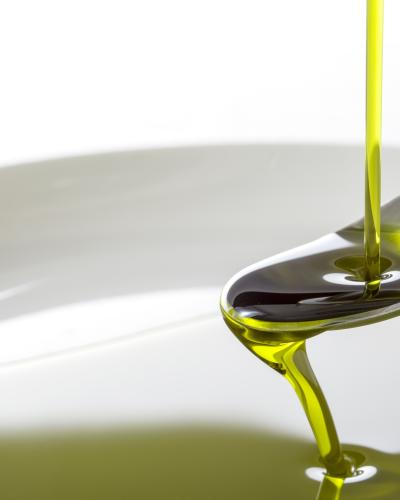
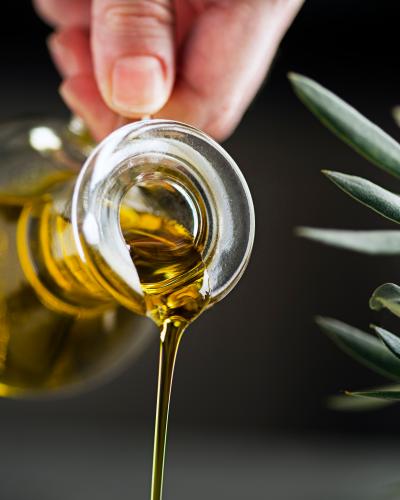
The olive oil produced in Fourni Korseon, a small cluster of islands in the Northeastern Aegean, is a characteristic agricultural product of the area, inextricably linked to the islands’ particular microclimate and traditional cultivation. Its production is based mainly on the Koroneiki variety and often follows organic farming practices, with an emphasis on quality, low acidity, and rich organoleptic characteristics.
The olive oil of Fourni Korseon is predominantly Virgin Olive Oil, produced from the Koroneiki variety (or synonyms such as Ladolia, Psilolia), which thrives in the dry, warm conditions of the Aegean. The uniqueness of the product lies in the combination of the variety with the soil and climate environment of Fourni, which imparts to the oil a fruity and slightly pungent taste and particularly low acidity (which in certain cases of organic production is reported between 0.1% and 0.4%), indicating excellent quality. A significant part of the production follows the strict specifications of organic farming according to Regulation (EC) 834/2007, underlining the producers’ respect for the natural environment.
The island’s microclimate is characterized as Mediterranean and dry-warm, with limited rainfall and mild winters, conditions that favor the resilient Koroneiki variety. The soil of Fourni is often rocky and barren, a fact which, combined with the moisture it retains, as well as the olive tree’s resistance to salinity, contributes to the production of olives with a high concentration of aromatic and quality components. These particular soil and climate conditions, despite the difficulties in cultivation, are believed to be decisive for the superiority of the flavor and quality of the local olive oil.
The cultivation and olive milling method for olive oil in Fourni Korseon, especially in the case of organic farming, emphasizes quality and the immediate processing of the fruit.
Cultivation
The cultivation of the Koroneiki variety is adapted to the dry and hot conditions of the islands, although the lack of irrigation can lead to increased biennial bearing (alternation of productive years). Fertilization of olive trees in organic production is carried out using environmentally friendly methods, such as green and foliar fertilization, the use of animal manure or approved organic fertilizers. Plant protection is achieved with mild, insect-repellent preparations (and not poisons) to combat pests such as the olive fruit fly, in accordance with organic farming regulations.
Harvesting and Olive Milling
The harvesting of the fruit is usually carried out by beating the branches, avoiding the collection of olives from the ground or those that fall into nets due to over-ripening, a practice that ensures the low acidity of the final product. After collection, the fruit is immediately placed in cloth sacks or plastic crates (as recommended for optimal ventilation and temperature control), and transported to a certified olive mill on the same day or at the latest the next, so that the quality is not compromised by poor or delayed transport.
The olive milling process follows the “cold” extraction method, where the malaxation of the olive paste takes place at a temperature below 27°C. This practice is of vital importance, as it ensures the preservation of the qualitative characteristics of the olive oil, its polyphenols and its bioactive components, resulting in very low acidity. The final product is stored in stainless steel tanks and under low-temperature conditions to preserve its quality.
Olive production on Fournoi Korseon, although small in volume due to the size of the island complex, has a vital impact on the local economy and social cohesion. On a small and remote island, maintaining traditional cultivation and emphasizing organic production offer a clear quality advantage that can be translated into better prices and higher income for producers, creating identity and value in the market. Olive growing keeps the agricultural sector alive and is linked to the community’s ecological awareness, particularly when environmentally friendly practices are adopted that avoid the use of chemicals and pesticides. In addition, cultivation preserves the island’s landscape and biodiversity, while at the same time contributing to the autonomy and food security of the inhabitants.
Olive cultivation in the Aegean islands, including Fournoi Korseon, has deep roots that disappear into antiquity, forming an integral part of Mediterranean diet and culture. For small and remote island complexes, the olive tree was not merely a crop, but a symbol of life, resilience and self-sufficiency. The Koroneiki variety, which predominates, is one of the oldest Greek varieties, known for its excellent yield in high-quality olive oil, a fact that proves the timeless connection of the place with olive production. Cultural heritage is reflected in traditional cultivation and harvesting techniques, as well as in the communal dimension of the process, where harvesting was often a collective effort.
The customs surrounding olive production in Fourni follow the broader traditions of the Aegean, where the harvesting season (usually from November to January) is a major social and agricultural celebration. The gathering of the fruit, known as “liomazoma” or “liatrismo,” was traditionally carried out with the participation of the entire family, often using simple tools such as the “comb” and the “stick” (beating the branches). The most important custom is immediate oil extraction, with the fruit being quickly transported to the olive mill (in earlier times to the “kolokythala”), so that the “first oil,” the fresh juice of the olive, can be produced. This immediate processing, which today also constitutes a modern quality specification (cold pressing), was originally a traditional practice that ensured better quality and lower acidity, even before contemporary quality regulations were established.
Virgin Olive Oil from Fournoi, as a cornerstone of the Mediterranean diet, consists of almost 100% fat and provides approximately 884 kcal per 100g. It is distinguished by its high concentration of monounsaturated fatty acids (around 73%, mainly oleic acid), which contribute to reducing the risk of cardiovascular diseases, while it also contains 13.8% saturated and 10% polyunsaturated fats. Its quality is enhanced by the high concentration of bioactive compounds, such as Polyphenols and tocopherols (e.g., oleuropein), which give it its pungent taste and provide antioxidant protection to blood lipids. Specifically, it contains Oleocanthal (anti-inflammatory action) and Oleasin (antioxidant). Finally, olive oil is rich in fat-soluble Vitamins E (antioxidant) and K (essential for coagulation and bones).
Virgin Olive Oil from Fournoi, as a cornerstone of the Mediterranean diet, consists of almost 100% fat and provides approximately 884 kcal per 100g. It is distinguished by its high concentration of monounsaturated fatty acids (around 73%, mainly oleic acid), which contribute to reducing the risk of cardiovascular diseases, while it also contains 13.8% saturated and 10% polyunsaturated fats. Its quality is enhanced by the high concentration of bioactive compounds, such as Polyphenols and tocopherols (e.g., oleuropein), which give it its pungent taste and provide antioxidant protection to blood lipids. Specifically, it contains Oleocanthal (anti-inflammatory action) and Oleasin (antioxidant). Finally, olive oil is rich in fat-soluble Vitamins E (antioxidant) and K (essential for coagulation and bones).