Tsipouro - Souma Samou
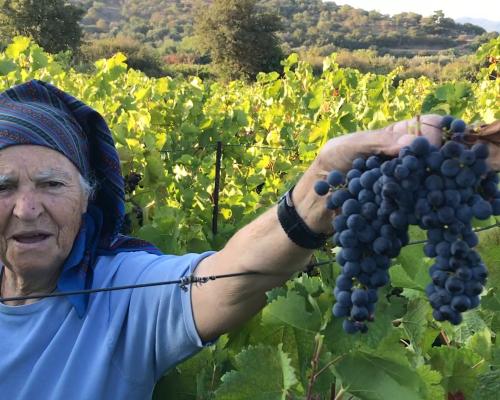
The viticultural tradition of Samos, centered on the aromatic Muscat, dominates the production of local distillates. On the island, the grape marc distillate, which is essentially a local variation of tsipouro, is more widely known by the name Souma. The Souma of Samos stands out because of its raw material, as it is derived mainly from the pomace of the small-berried Muscat of Samos, giving it a particularly intense aromatic character. Its production is closely linked to the vinification of the renowned Samian wine, as it makes use of the residues from the pressing of the grape pulp.
The grape marc distillate produced on Samos bears the local name Souma, which is synonymous with tsipouro for the Aegean islands, as well as for Rhodes and Paros. Souma, as a grape marc distillate, belongs to the broader category of distillates of agricultural origin. Its quality is recognized by the fact that it is derived mainly from the aromatic pomace of the Muscat of Samos variety. A commercially available Souma from Samos is described as a distillate from selected grapes of top varieties such as Samian Muscat, confirming the use of the island’s emblematic variety as the base of the distillate. In addition, the United Winemaking Agricultural Cooperative of Samos (UWC Samos) has already begun (year 2025) the production of tsipouro from Muscat, highlighting the product’s potential.
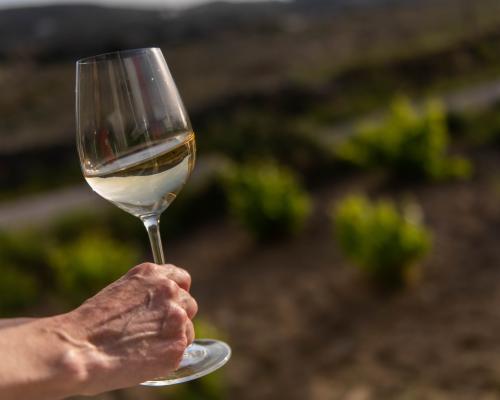
The production of Souma/Tsipouro on Samos is inextricably linked to the island’s vine cultivation, which extends over semi-mountainous masses and terraces on the foothills of Mount Kerkis and Mount Ampelos (Karvounis). The particularly poor soil, combined with the Aegean climate, characterized by mild winters and dry summers, favors the cultivation of Muscat, which constitutes the main raw material for the pomace. The tradition of distillation exists, like vine cultivation, throughout the island. The geographical extent of Muscat cultivation, which forms the basis for the pomace, covers selected vineyards across the island, with traditional cultivation practices on narrow terraces contributing to the preservation of the landscape and the quality of the grape.
The production of Souma/Tsipouro of Samos is a traditional practice, closely linked to the end of winemaking. The method follows the general standards of marc distillation, with the particularity lying in the raw material:
- Raw Material: The main raw material is the grape marc (the mass of skins, seeds and residues left after pressing the grapes for wine production), primarily from the aromatic Muscat of Samos variety. In contrast to some other regions, Souma of Samos comes mainly from the distillation of grape marc and/or wine and not from figs (as is the case, for example, in Chios).
- Fermentation: The grape marc, which still contains residual sugars, is placed in special areas or containers so that alcoholic fermentation can be completed. This process is critical, as the alcohol that will be distilled comes from the sugary components of the marc.
- Distillation: Distillation is carried out in traditional copper stills (cauldrons). The grape marc is boiled, and the vapors of the alcohol and aromatic components are collected and condensed.
- Traditional practice often involves single distillation (in contrast to the double-distilled tsipouro of Northern Greece), although commercial tsipouro today may be double-distilled for greater purity.
- Use of Anise/Aromatics: In the Aegean, and particularly on Samos, traditional production of Souma/Tsipouro does not include the addition of anise, allowing the aromatic characteristics of Muscat to fully emerge. The distillate is therefore usually without anise.
- Seasonality: The distillation of Souma/Tsipouro traditionally takes place after the end of the grape harvest and winemaking, usually in the autumn months (October–November).
- Alcohol Content: The alcohol content of Souma of Samos usually ranges around 38% vol.
The production of Souma/Tsipouro on Samos is an important part of the agricultural economy and of the utilization of winemaking by-products. Samos is internationally renowned for its sweet Muscat wine, and the production of Souma enables vine growers to make full use of the pomace, which would otherwise be used as animal feed or fertilizer. Souma contributes to the preservation of viticulture and improves the standard of living of the members of the cooperative, which plays a central role in the local community. The distillate functions as a local tourist product and a cultural symbol of hospitality, strengthening the island’s identity beyond its famous wine.
The distillation of grape pomace in Greece has roots that are lost in the centuries, with the craft developing mainly during Byzantine times, particularly in the monasteries of Mount Athos. In the Aegean, and on Samos in particular, the production of Souma is a direct outgrowth of the island’s long-standing winemaking tradition, which dates back to antiquity. The abundance of grapes and the need to utilize the harvest residues led to the development of this parallel activity. The name “Souma” is characteristic of the islands and has become established as the traditional, strong distillate that accompanies social events. The history of the product on Samos represents an unbroken tradition preserved by local producers, capitalizing on the superiority of Samos Muscat.
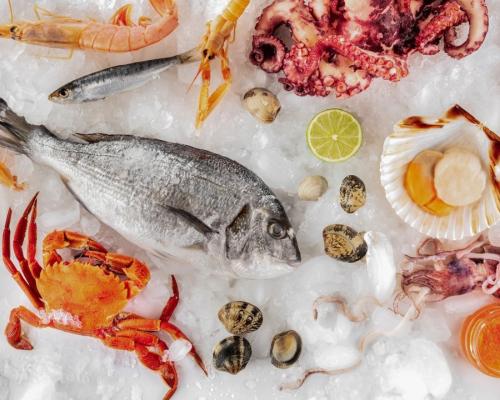
The production of Souma/Tsipouro in Samos is a social event that extends beyond simple agricultural labor, focusing on social interaction and celebration. The distillation season, in autumn, is traditionally associated with the “opening of the cauldron” (the alembic). This ritual gathers friends and relatives around the still, accompanied by feasting, traditional songs and dances, a practice found in many regions of Greece. During the distillation, the “first distillate” is sampled and the quality of the year’s harvest is discussed. Souma is usually consumed neat, in small glasses, and is always accompanied by the island’s traditional appetizers. It is par excellence the drink of company, hospitality, and sincere conversation.