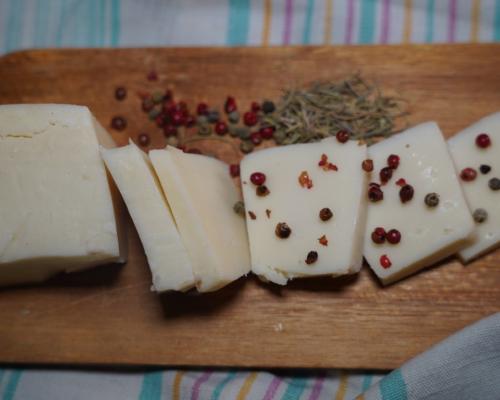
Goat cheese (myzithra), Kopanisti, Ladotiri
The production of traditional dairy products such as goat cheese, Kopanisti and Ladotyri in Fourni Korseon is part of the local agricultural and livestock-farming activity. These products are mainly produced in small family units or dairies, using local goat’s milk.
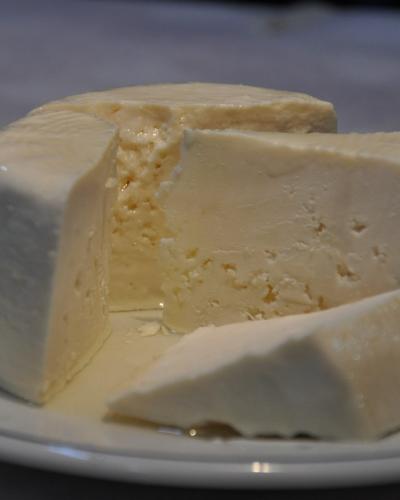
The dairy products of Fourni, such as Goat Cheese (locally it may be referred to as white cheese or myzithra), Kopanisti and Ladotyri, are made from the milk of animals that graze freely in the island’s distinctive environment. The animals’ diet, based on the spontaneous flora of the Aegean, rich in aromatic herbs and thyme (as is also noted for other products of the island), imparts a distinctive aroma and flavor to the milk and, consequently, to the cheeses. Goat cheese is a mainstay of local cheesemaking, while Kopanisti, a soft fermented cheese with a piquant taste, and Ladotyri, a hard cheese preserved in olive oil, are traditional preparations more widely known throughout the Aegean. In Fourni, they bear the distinctive character and organoleptic features conferred by extensive livestock farming and the island’s vegetation.
Livestock farming in Fourni is traditionally extensive, with animals grazing freely on the rocky slopes, helping to preserve the natural landscape.
The production of dairy products in Fourni is based on traditional techniques and the use of goat’s milk. The process begins with the collection of fresh milk, especially in springtime, when the milk is richer due to abundant grazing.
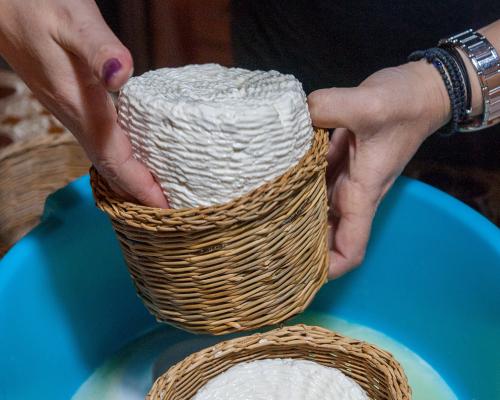
- Goat Cheese (White/Myzithra/Kathoura): The milk is pasteurized or used raw (particularly in traditional small-scale production). For white cheese, it is coagulated with rennet and the curd is transferred to molds for draining. For Myzithra (locally “kathoura”), the whey remaining from the production of hard cheese is used; it is reheated with the addition of a small quantity of fresh milk or cream.
- Kopanisti (Local Variation): Production follows the traditional Aegean method, which is characterized by successive fermentation and manual stirring (“pounding”). The curd is mixed with salt, left to mature, and then kneaded and stirred repeatedly for several days or weeks. This process creates its characteristic creamy texture and pungent, intense flavor.
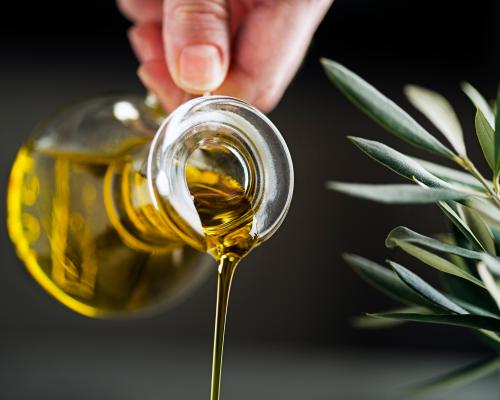
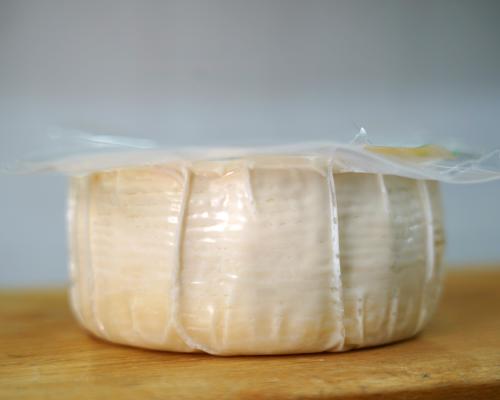
- Ladotyri (Local Variation): The milk is curdled, the curd is pressed and salted. Ladotyri is a hard cheese which, after an initial maturation period (usually 3 months), is placed in barrels or containers and completely covered with local olive oil (as in Ladotyri Mytilinis PDO) for further preservation and aging. The olive oil gives it its characteristic yellow tint and keeps it moist, while also imparting a distinctive aroma.
Cheesemaking is carried out mainly in small family-owned dairies, preserving practices intact, without the use of modern industrial methods.
The primary sector of Fourni Korseon has historically been dominated by fishing, a fact that often overshadows other activities. However, livestock farming (mainly sheep and goats) and the cheesemaking associated with it constitute an important supplementary and stabilizing pillar for the local economy and the island’s self-sufficiency. The existence of family-owned dairies maintains jobs in a traditional profession and ensures the food self-sufficiency of the inhabitants, especially during periods of reduced tourist activity or difficulties in fishing. The production of local cheeses, honey, and olive oil reinforces the local identity and provides an additional source of income through sales to visitors and the local market, contributing to agritourism and the diversification of the tourism product of the island complex.
Cheesemaking in Fourni, as in all Aegean islands with extensive livestock farming, has deep roots in the need to preserve surplus milk, especially during the spring period. Historically, the production of cheeses such as myzithra, white brined cheese (feta-type), and ladotyri formed part of the family economy and diet, ensuring protein intake throughout the year. Production techniques were passed down from generation to generation, using simple tools and taking advantage of natural conditions (such as underground cellars for maturation). Kopanisti, as a fermented cheese, embodies the wisdom of islanders in transforming whey and milk by-products into a spicy and easy-to-preserve product. The history of cheesemaking in Fourni is inextricably linked to the subsistence character of the island, where livestock farmers and fishermen lived in close harmony with the environment.
Cheese production in Fournoi is linked to the seasonality of livestock farming. The milking period and peak milk production (spring) marked the beginning of the main cheesemaking season. It was common for families to collect the milk and produce large quantities of hard cheese (for preservation) and mizithra (for immediate consumption). Cheese was an integral part of festive tables and local feasts (such as that of Saint John the Heater), offered either fresh, in pies, or as an accompaniment to ouzo and wine. Hospitality in Fournoi always included the offering of local cheeses and thyme honey, thus highlighting their special cultural value as identity products of the place.
In summary, the cheeses from Fourni offer a nutritional profile of high biological value, enhanced by the animals’ diet on the herb-rich flora of the Aegean.
In summary, the cheeses from Fourni offer a nutritional profile of high biological value, enhanced by the animals’ diet on the herb-rich flora of the Aegean.