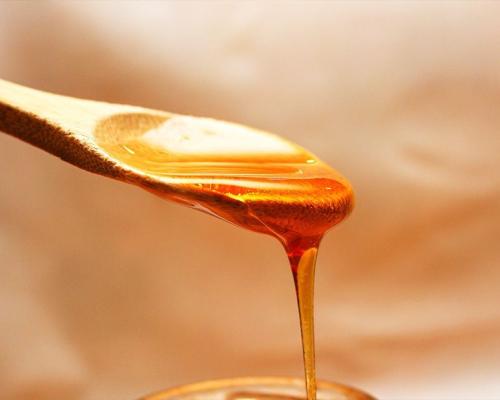
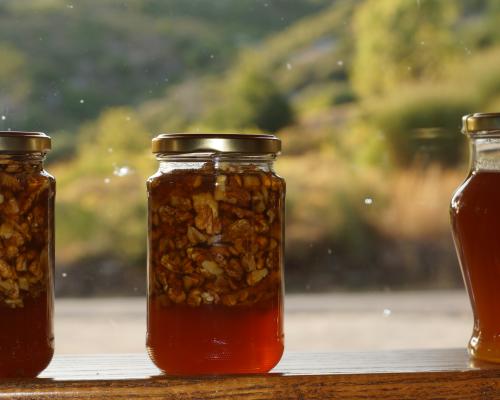
honey of Fournoi (thyme, reiko honey)
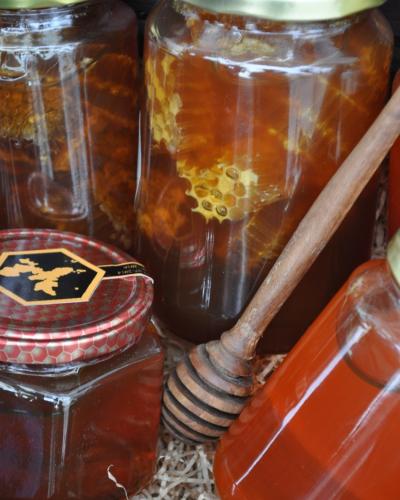
The honey of Fournoi Korseon, especially the Thyme Honey and the Heather Honey (known locally as Anama or Anamatomelo), is a top-quality agri-food product of the Northern Aegean. Its production is closely linked to the rich, wild and undisturbed flora of the island complex, where intense thyme and autumn heather (heath) thrive. This natural abundance, combined with the tradition of the local beekeepers, endows the honey with characteristics that make it particularly aromatic, with a rich taste and high nutritional value, setting it apart in the Greek and international market.
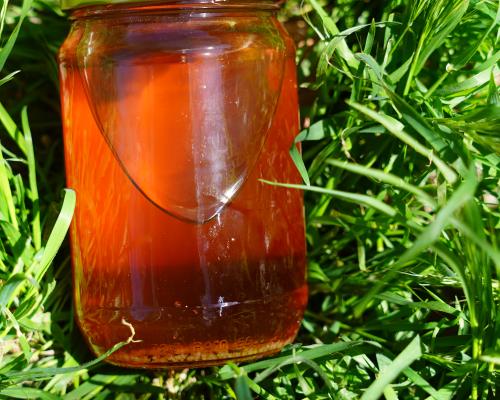
Beekeeping in Fournoi produces two main varieties with a unique identity. Fournoi Thyme Honey has an exceptionally high pollen content from thyme, often reaching 97%, which gives it a light amber color, an intense, distinctive flavor and the characteristic aroma of thyme. This honey crystallizes over a relatively long period of time (6–18 months). The second main variety is Heather Honey, traditionally called Anama or Anamatomelo, and is collected mainly from autumn heather. Anama stands out for its copper-brown color, its thick, viscous texture, its intensely distinctive flavor with earthy notes, as well as for its very rapid and complete crystallization (within 1–3 months), a natural trait of high quality. Finally, certain local producers package it under the brand name “Fournoi Korseon Thyme Honey”, highlighting its geographical origin.
Fournoi Korseon is a complex of islands and islets located in the northeastern Aegean, southwest of Samos and southeast of Ikaria. The complex consists of more than 20 islands, the main ones being Fournoi and Thymaina. The small and rugged terrain, combined with the dry, hot island climate, creates ideal soil and climatic conditions for the development of aromatic plants and shrubs. The area is covered by extensive thickets of thyme (Thymus capitatus) and autumn heather (Erica manipuliflora or Erica verticillata), which are wild and thrive in dry and rocky soils, offering rich, high-quality nectar. The isolation of the island complex from other intensive agricultural activities also contributes to the purity and high quality of the honey.
Honey production in Fournoi is based on traditional yet at the same time modern, mild beekeeping practices, with absolute respect for nature and the life cycle of the bee.
- Thyme Honey: The collection of nectar from thyme takes place mainly in the summer months (June – July), when thyme is in full bloom. Beekeepers practice nomadic beekeeping on a limited scale, transporting the hives to suitable spots on the island with a high concentration of thyme, thus ensuring the high monoflorality of the final product.
- Heather Honey (Anama): The collection of nectar from autumn heather takes place during the early autumn months (September – October). This honey is considered of exceptional importance for the strength and vitality of the hive, as it nourishes the bee colony and helps it develop and withstand the winter.
- Extraction & Standardization: The honey is extracted by cold centrifugation immediately after harvesting, preserving its nutritional and aromatic components intact. Standardization and packaging follow strict rules, while in certain cases organic beekeeping methods are applied, further enhancing the quality of the honey. By-products of beekeeping in Fournoi include pollen, royal jelly and propolis.
Beekeeping is an important secondary occupation for the inhabitants of Fournoi, serving as a supplementary source of income alongside the dominant fishing sector and tourism. Honey production, and especially the reputation of thyme honey, strengthens the island’s agri-food identity. The annual “Honey and Traditional Products Festival” not only promotes the product, but is also an important cultural and tourist event, attracting visitors and contributing to the local economy through the showcasing and direct sale of products.
Beekeeping is an age-old activity in the wider Aegean area, and in Fournoi the knowledge and practice are passed down from generation to generation, embedded in rural culture. Honey production, like other staple products of the island (such as myzithra cheese and wild goat), has always been essential for the self-sufficiency of the island community. The name “Anama” for heather honey is a linguistic testament to this age-old tradition, highlighting the locals’ empirical knowledge of the nutritional and tonic properties of heather honey, which gives “anamosi” (strength) to the beehive and to humans.
The most vibrant custom related to honey in Fournoi is the “Honey and Traditional Products Festival,” which is held every summer, usually in early August. As part of this festival, the re-enactment of the honey harvest is often revived, where visitors are shown the process of extracting honey from the honeycombs. Beyond the demonstration, the festival is a fair, where honey-based delicacies are offered, as well as local dishes, accompanied by traditional music and dances, confirming honey’s place at the heart of the island’s gastronomic and social life.
Both the thyme honey and the heather honey of Fournoi possess exceptionally high biological value, which is mainly attributed to their rich content in bioactive substances.
- Thyme Honey: It is rich in trace elements such as copper, iron, potassium, magnesium and sodium, as well as boron. It has strong antiseptic and tonic properties, while traditional medicine recommended it for the prevention and treatment of infections of the respiratory and digestive systems.
- Heather Honey (Anama): Heather honey is known for its higher protein content (up to 2%) and mineral content compared to most Greek honeys. Scientific studies highlight its exceptionally high content of phenols and antioxidants, which are key factors in preventing aging and improving overall health. In addition, it is attributed properties that contribute to reducing cholesterol and caring for the urinary and digestive systems.
Both the thyme honey and the heather honey of Fournoi possess exceptionally high biological value, which is mainly attributed to their rich content in bioactive substances.
- Thyme Honey: It is rich in trace elements such as copper, iron, potassium, magnesium and sodium, as well as boron. It has strong antiseptic and tonic properties, while traditional medicine recommended it for the prevention and treatment of infections of the respiratory and digestive systems.
- Heather Honey (Anama): Heather honey is known for its higher protein content (up to 2%) and mineral content compared to most Greek honeys. Scientific studies highlight its exceptionally high content of phenols and antioxidants, which are key factors in preventing aging and improving overall health. In addition, it is attributed properties that contribute to reducing cholesterol and caring for the urinary and digestive systems.